



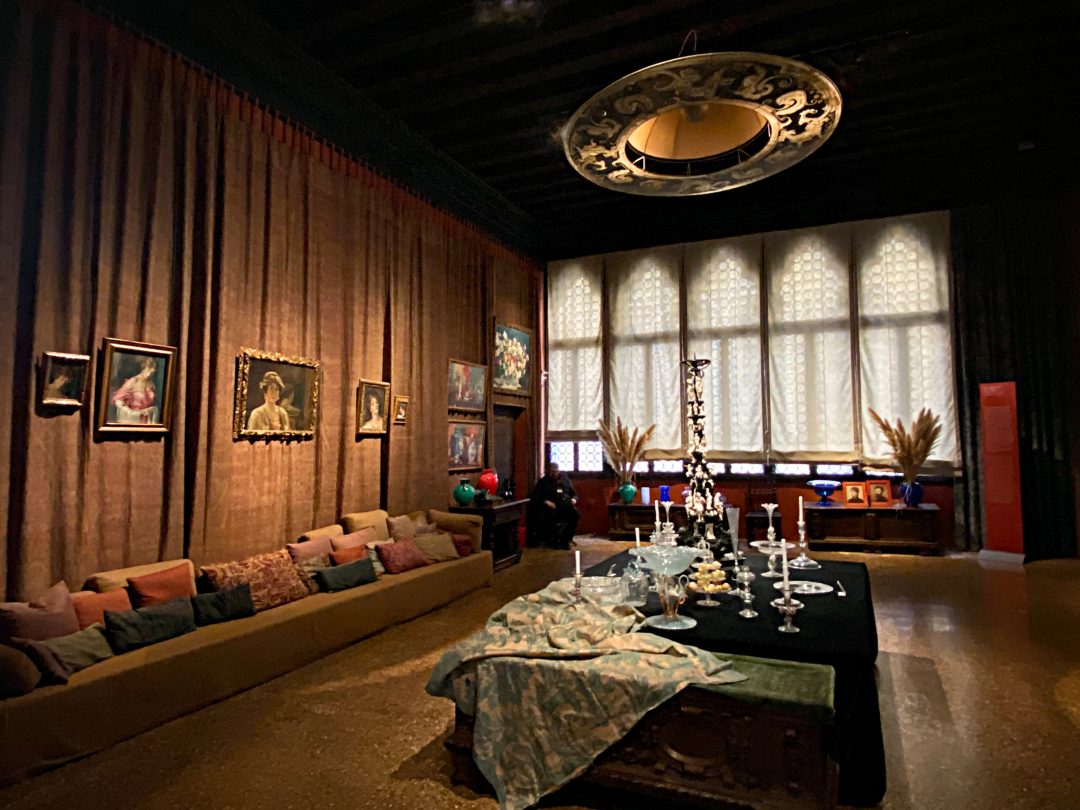
On Campo San Beneto stands a majestic palace, built in the mid-15th century by Benedetto Pesaro.
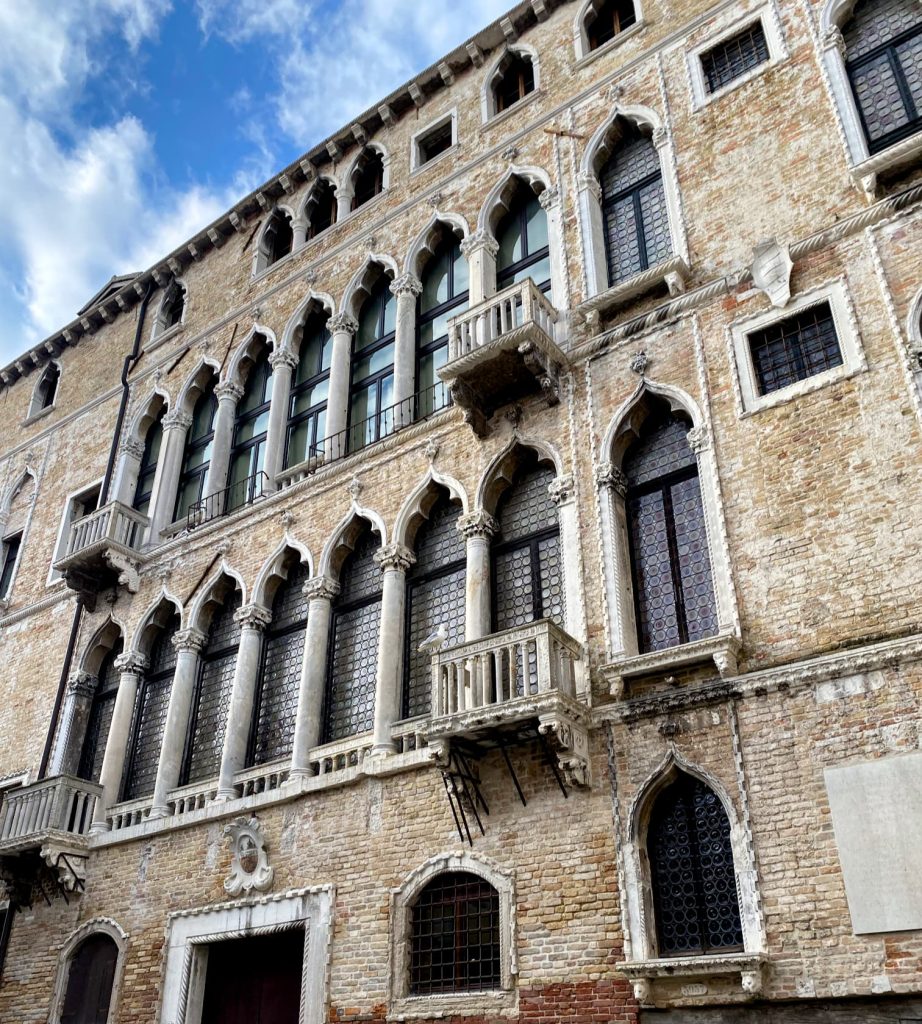
This Venetian Gothic-style building is the focal point of this intimate piazza. Although the structure is large, it’s symmetrical, double story window pattern provides a balanced façade, enabling the Palacio to be in context with the its neighbors.
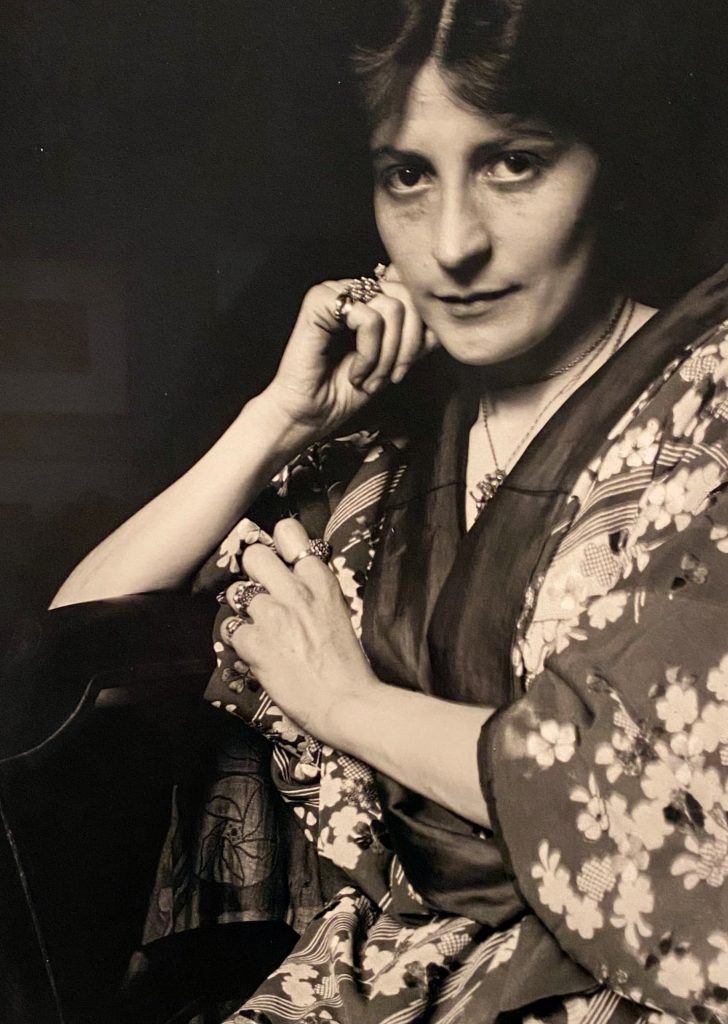
In the first half of the 20th century, it became the home and studio of Mariano and Henriette Fortuny, a talented and visionary couple whose name is undeniably associated with La Serenissima.
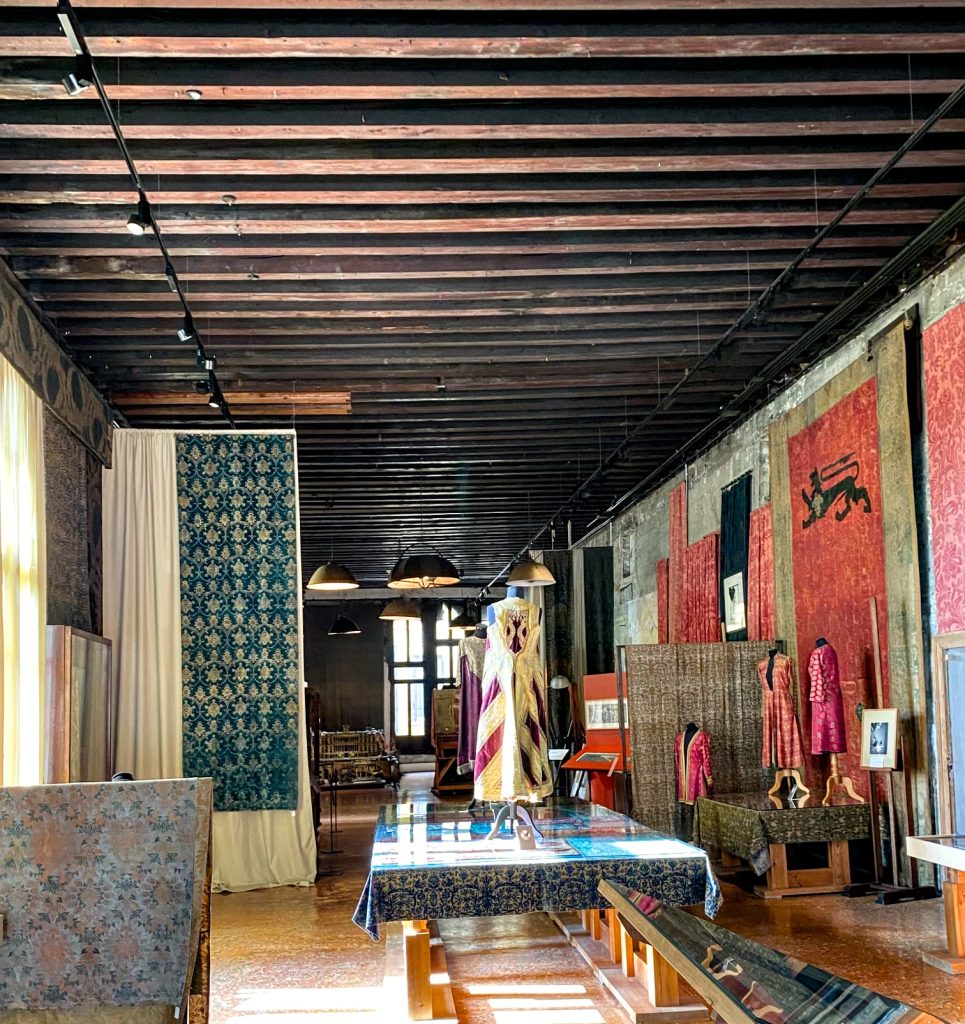
Walking through the entry door, now known as the Fortuny Palace, is no trivial act. It is an immersion into a secret world of creativity, curiosity, and imagination, where the air is still filled with the presence of its last inhabitants.
It is understandable why Mariano selected this structure above all others in 1898, even though it was in a state of advanced disrepair and neglect at the time.
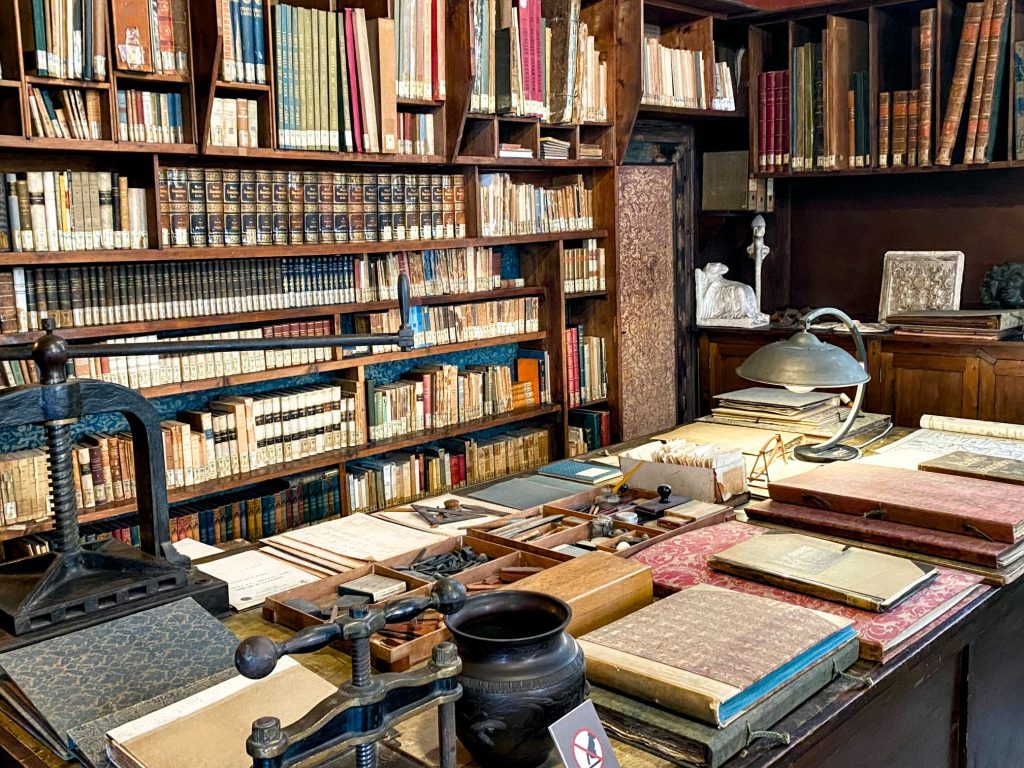
The past five centuries had left traces in its architecture of everything that Mariano loved. Formerly a commercial warehouse, the column spacing allowed for deeper room dimensions, natural light penetrations and open areas that allow flexibility such as a courtyard that had served as a theater, and walls that still held memories of sumptuous celebrations -not to mention the typography workshop and music societies that had been housed in the building.
In short, it was the perfect place for Mariano’s loves and passions.
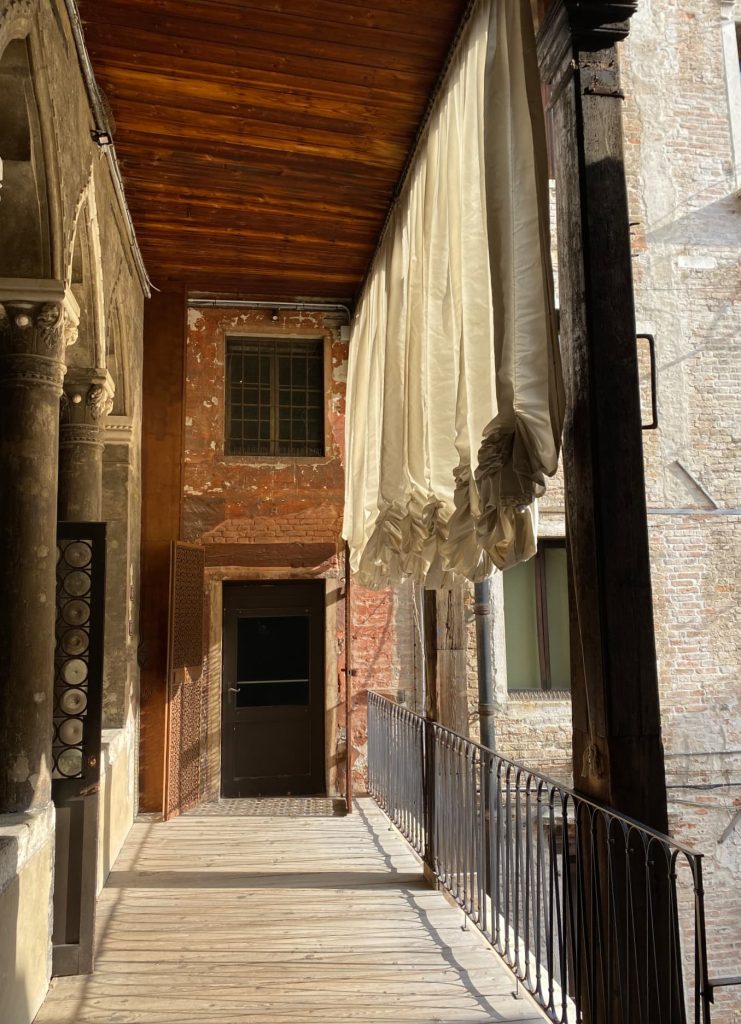
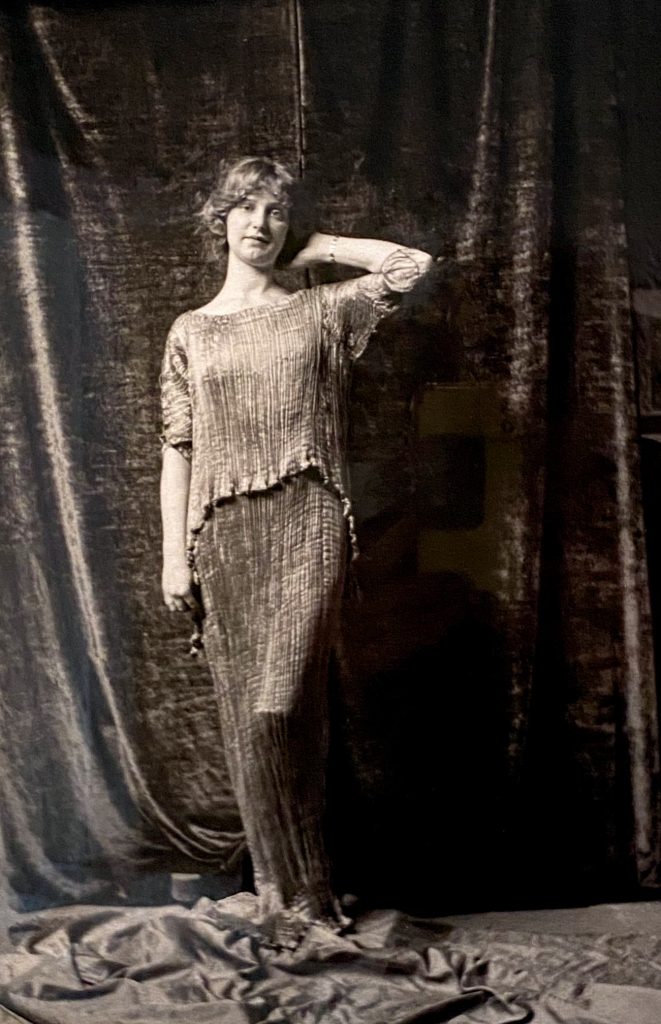
Richly talented himself, he found in this immense structure an echo of his own extravagance and genius. It was there that he created, with his wife and collaborator Henriette, the lamps and fabrics that made the Fortuny name famous throughout the world.
When Fortuny is mentioned, we think of fabrics and a famous silk pleat that the couple invented at the very beginning of the 20th century. This ingenious fabric with its small, tight pleats gave rise to the Delphos dress, described by Marcel Proust as “faithfully antique yet powerfully original”. This dress was slipped on over the head and only took shape on the body wearing it, light yet delicately weighted with Murano glass beads. The flowing lines of this garment were completely at odds with the fashion of the time, liberating the female body and creating a true revolution. Fortuny patented this unique pleating in 1909.
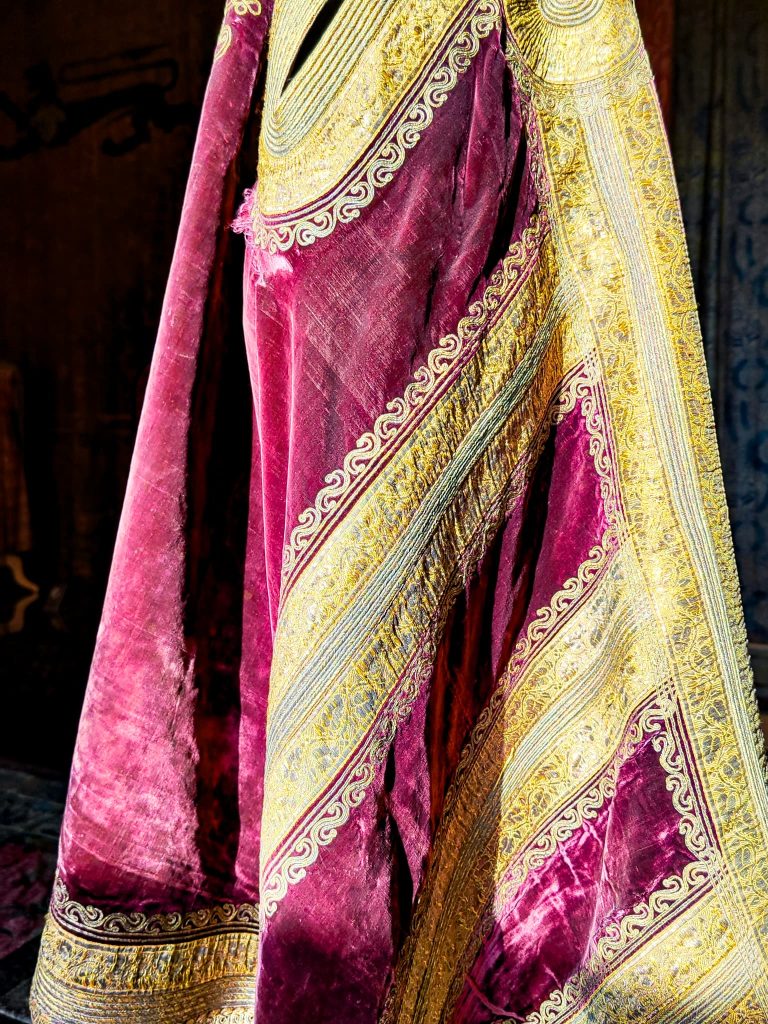
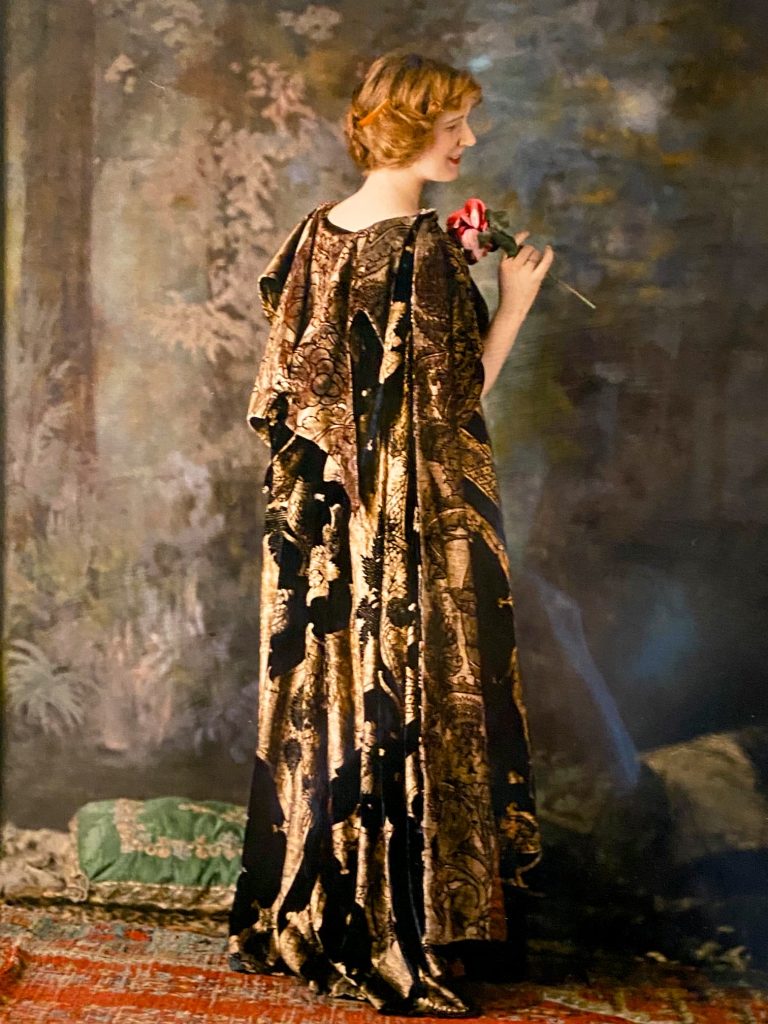
When Fortuny is mentioned, we also think of magnificent brocades and rich velvets in shades of amber, copper, and bronze, onto which the couple applied stenciled patterns of their own creation. They used these fabrics to make coats, draperies, scarves, cushions, and wall hangings.
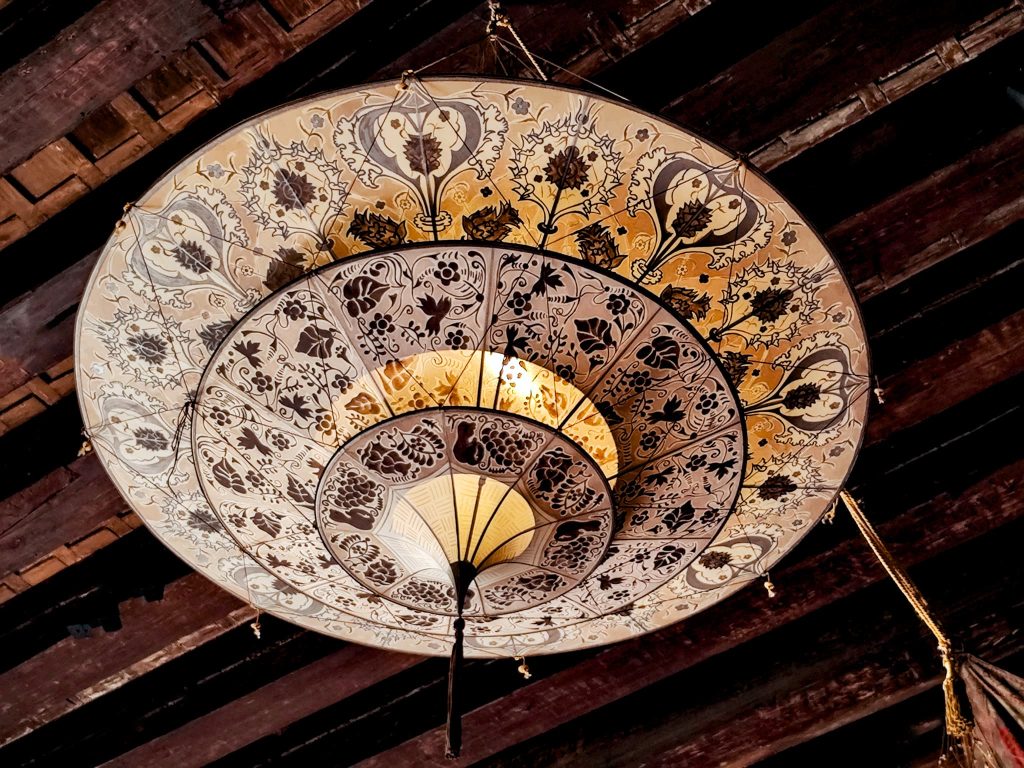
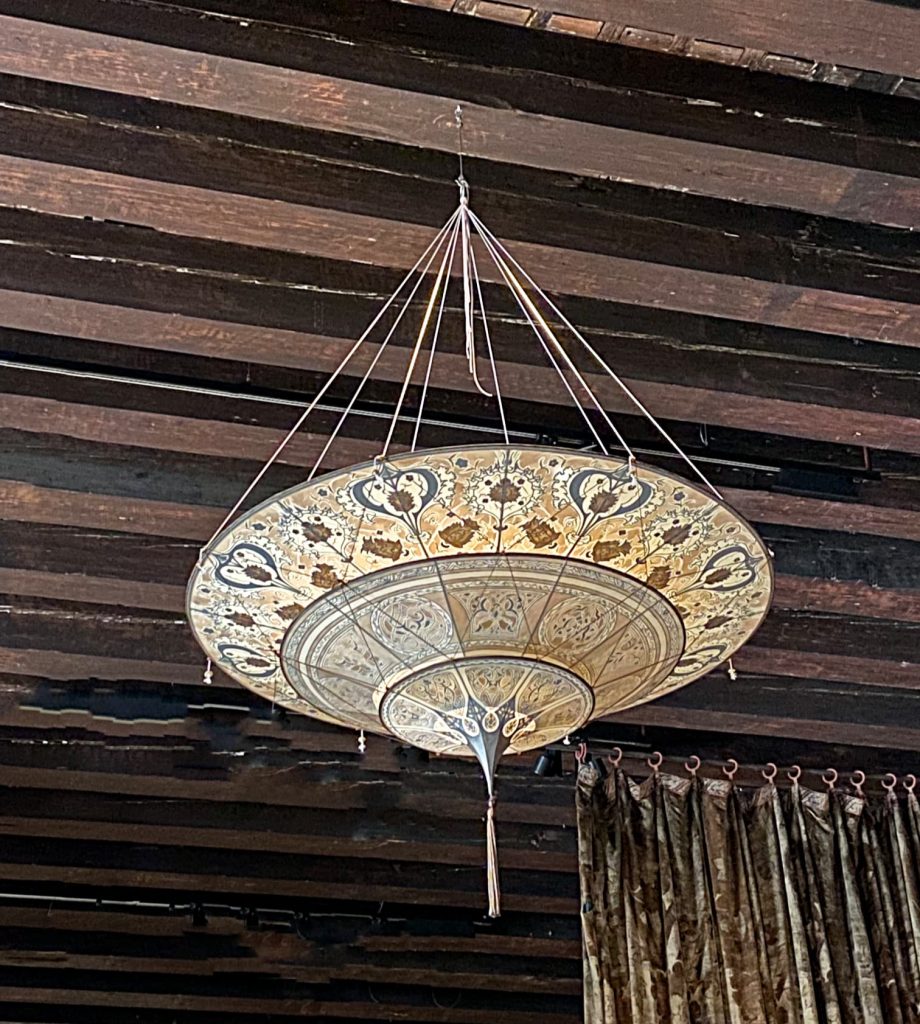
When Fortuny is mentioned, we also think of fragile, airy lamps made of stretched silk, hand-painted with patterns in a mixture of silver, oil, and colors. And we think of a famous reflective dome lamp that changed stage lighting by creating the illusion of the depth of the sky.
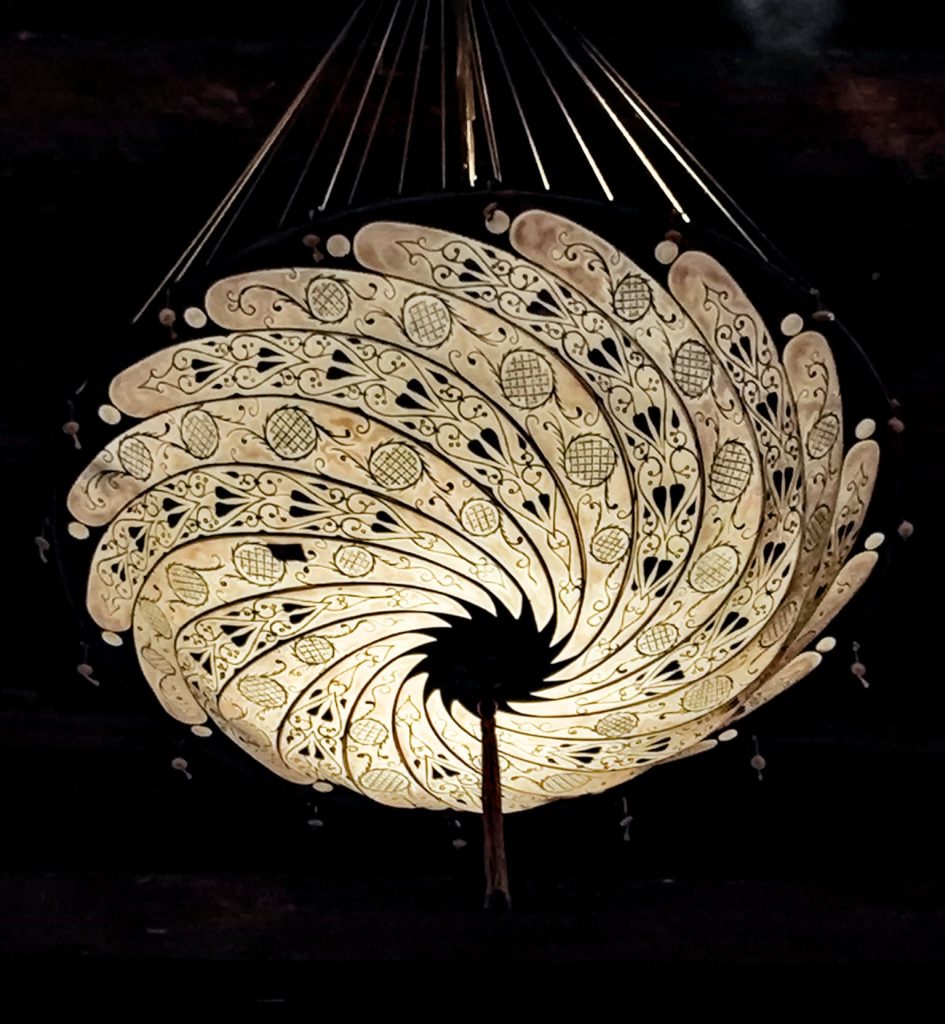
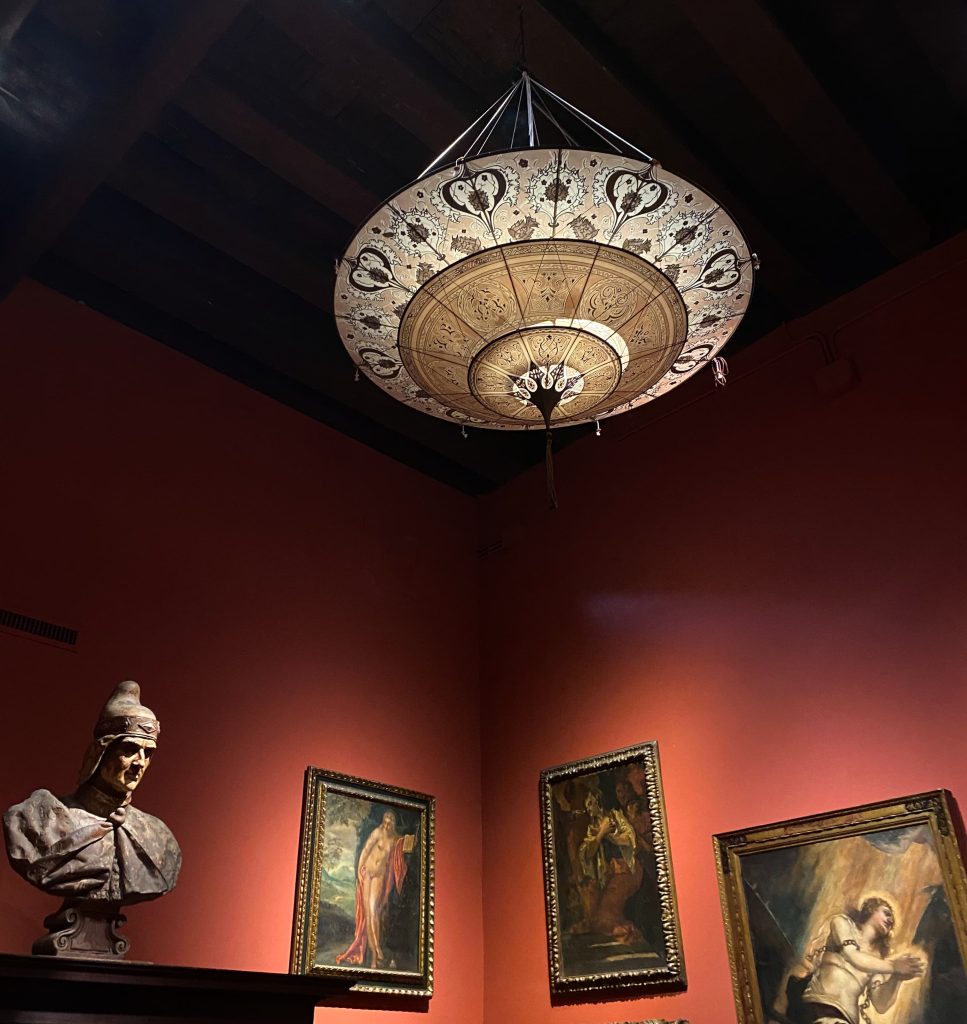
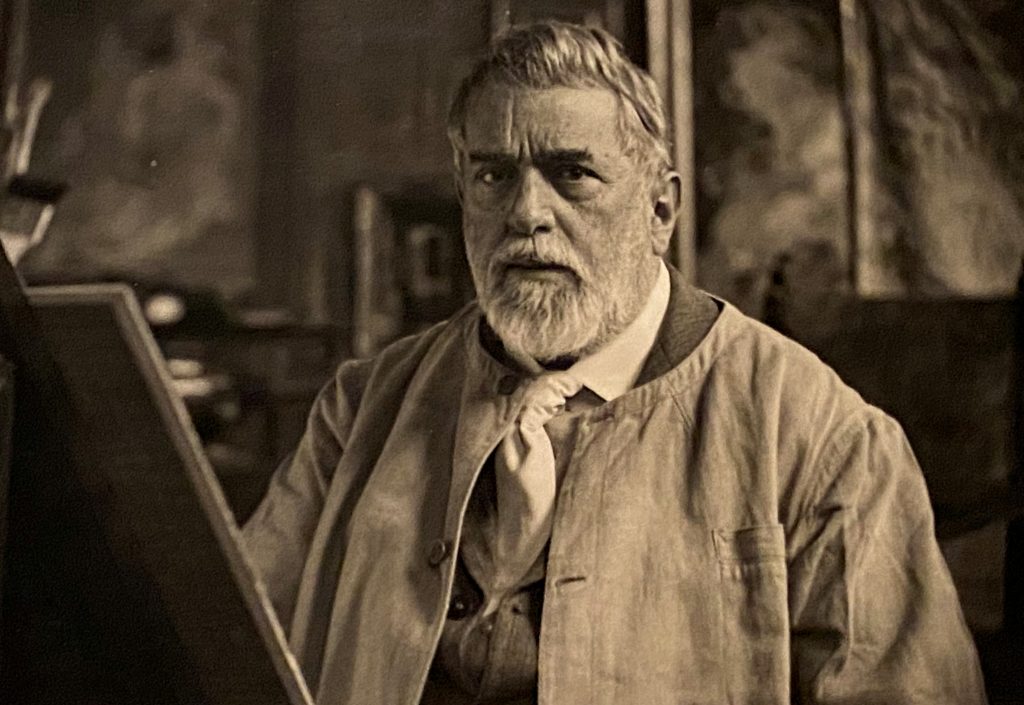
In Fortuny boutiques in Venice, Paris, or New York, you can find these fabled fabrics and lamps, timeless and brilliant creations that withstand the test of time and changing fashions. They are the quintessence of talent and expertise. They stand guard over their creator, described as the last man of the Renaissance. A total artist who turned everything he touched into gold: painting, engraving, set design, architecture, photography, sculpture, textile printing, and fashion… It’s enough to make your head turn. You have to visit the Fortuny Palace to discover the man (& the woman) behind the Fortuny brand and these timeless luxury items.
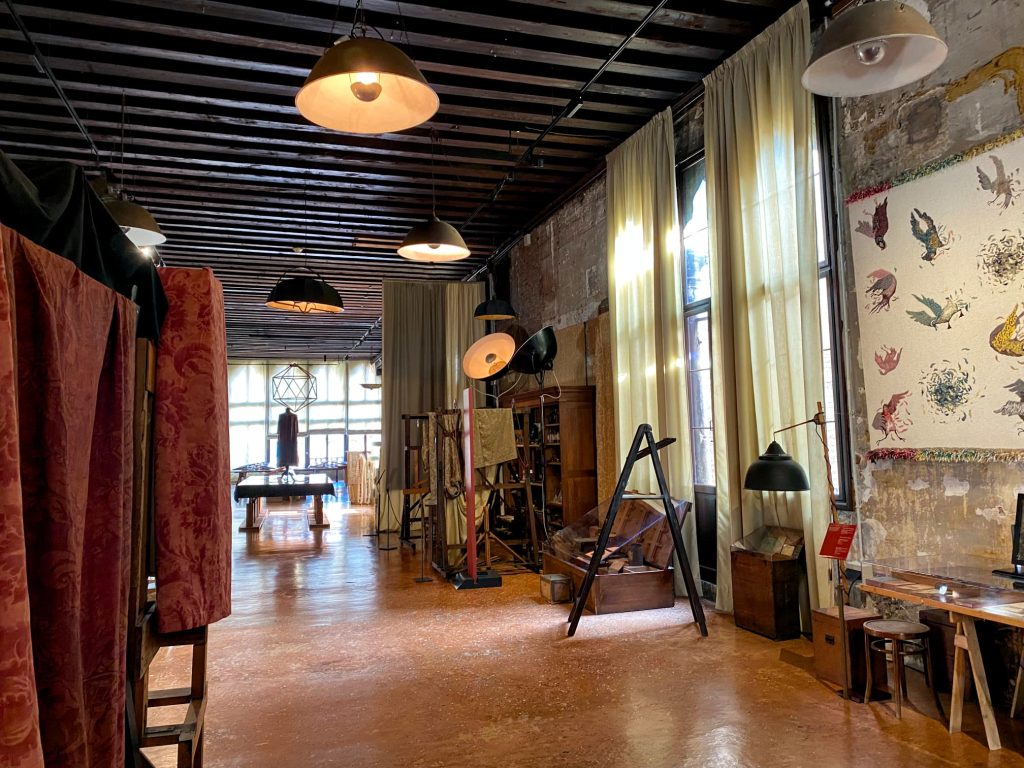
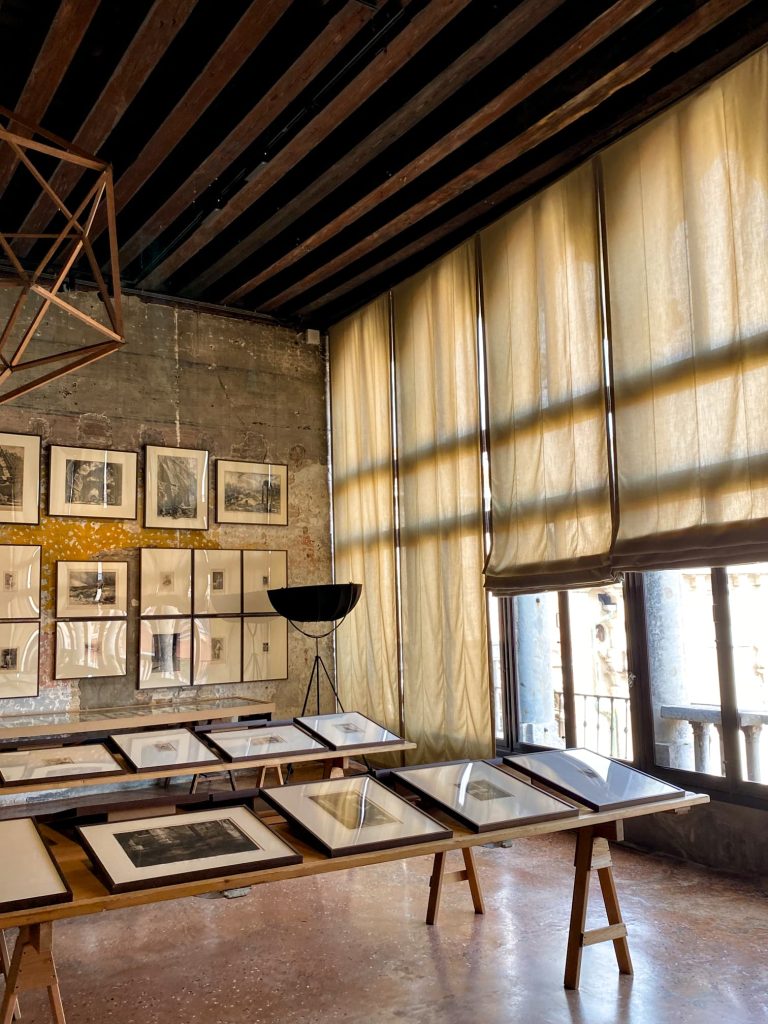
Like a bridge between two centuries and three countries (Spain, France, and Italy), Mariano Fortuny fell into the vast cauldron of creation without dogma or limits and came to deposit his treasures within the walls of this Venetian palace.
Walking through the rooms, you lose all sense of space. You go from a cabinet of curiosities to a laboratory, from a life-size theater set to delicate models, from stencil stamps to heavy velvet curtains, from a workshop to a palace from One Thousand and One Nights.
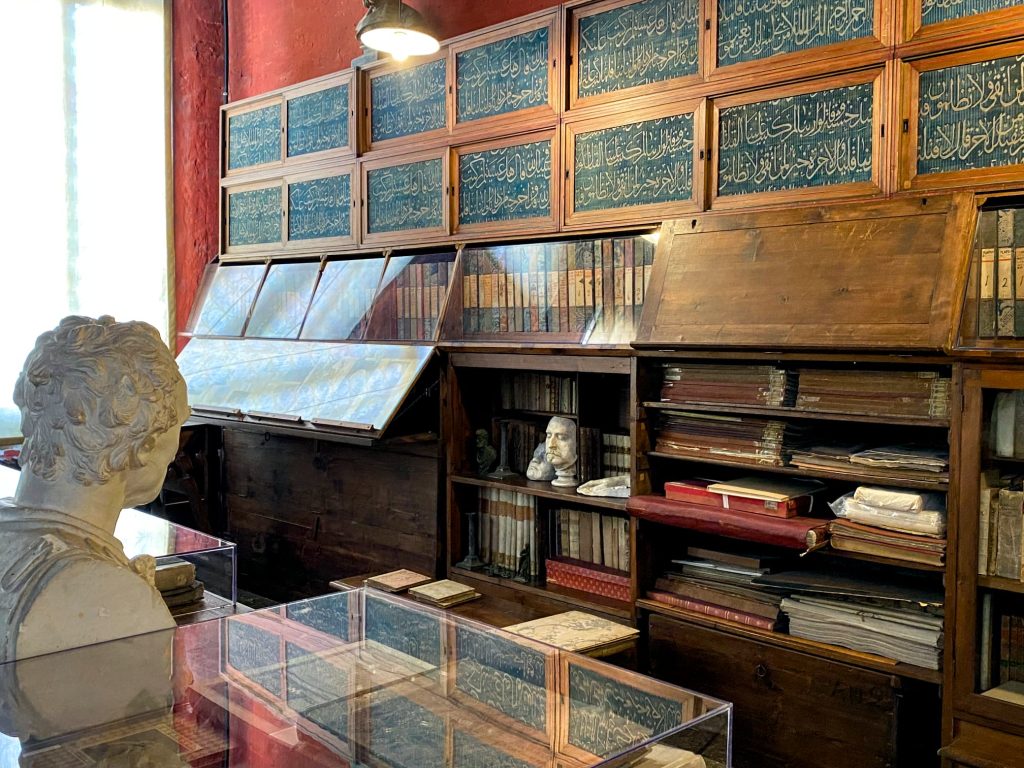
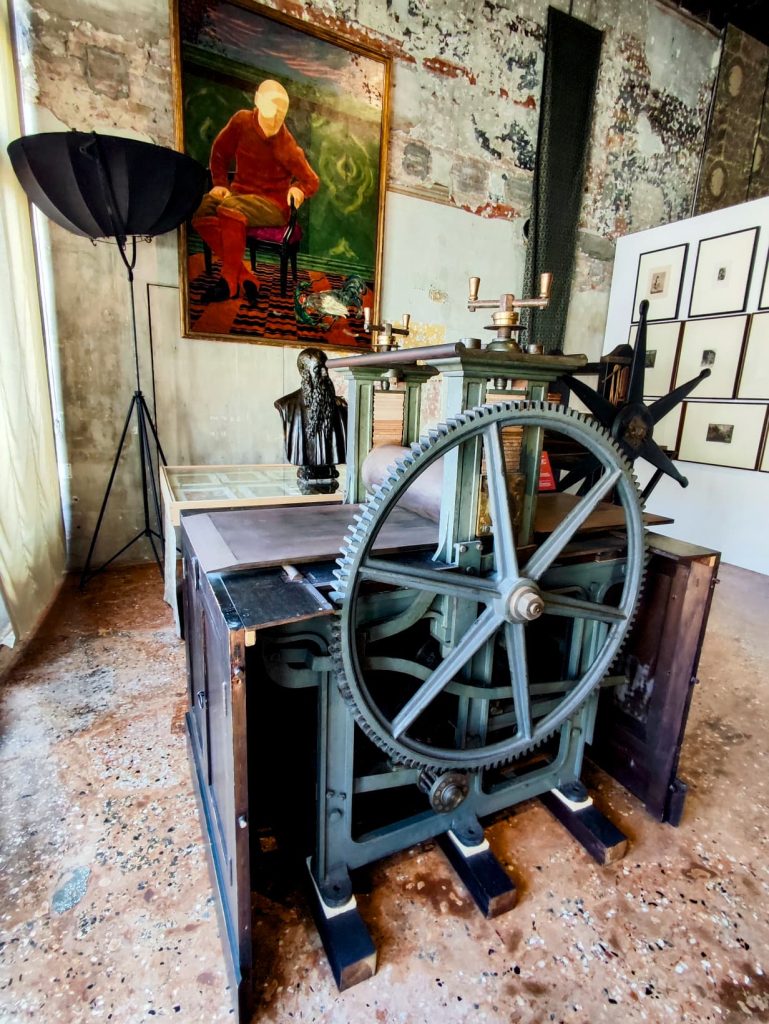
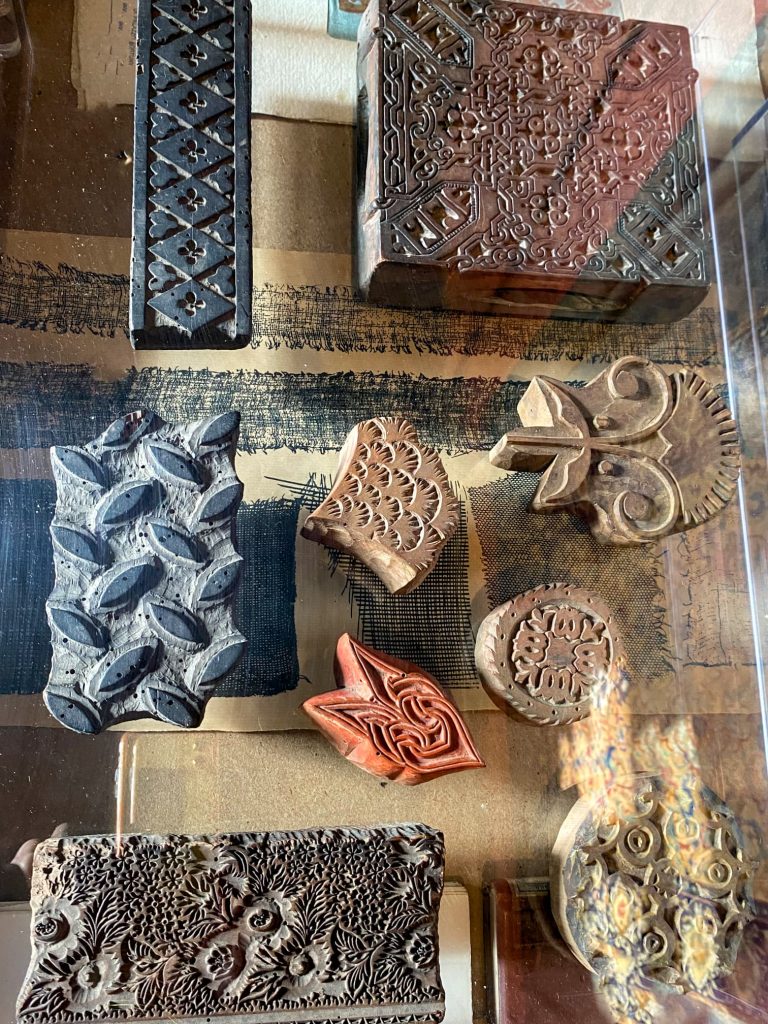
With disbelief and admiration, we discover everything this man was able to achieve. And we realize that, in his fabrics and lighting, he synthesized the universe that inhabited him, a universe made up of the Orient, illusions, secrets, and magic.
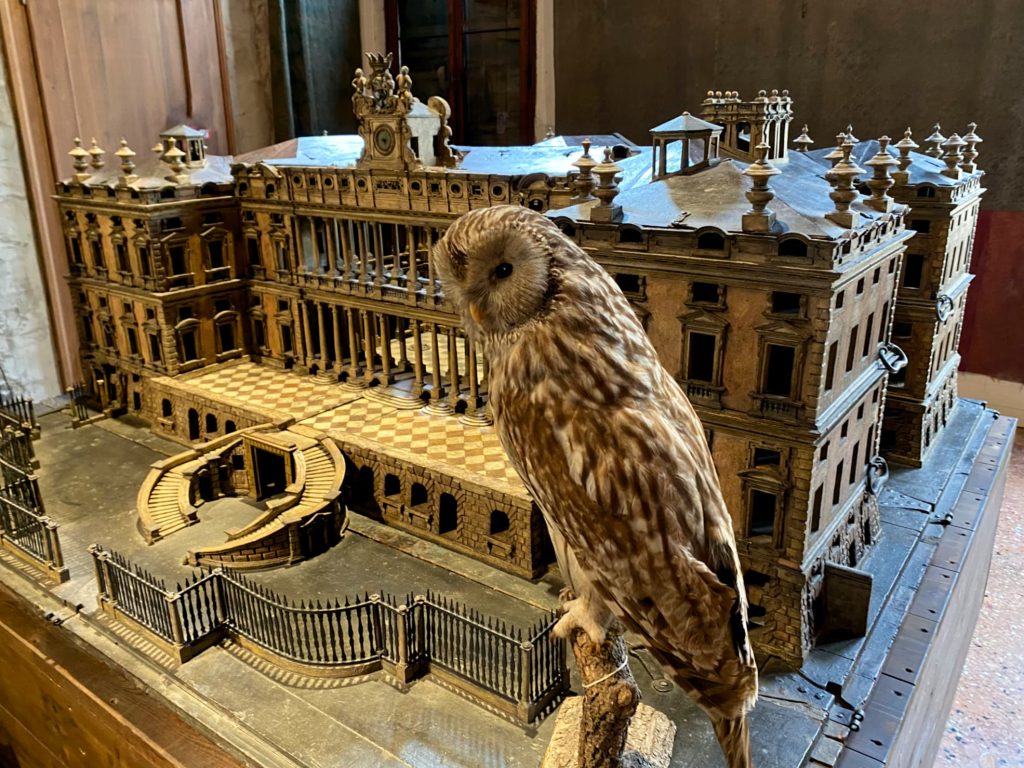
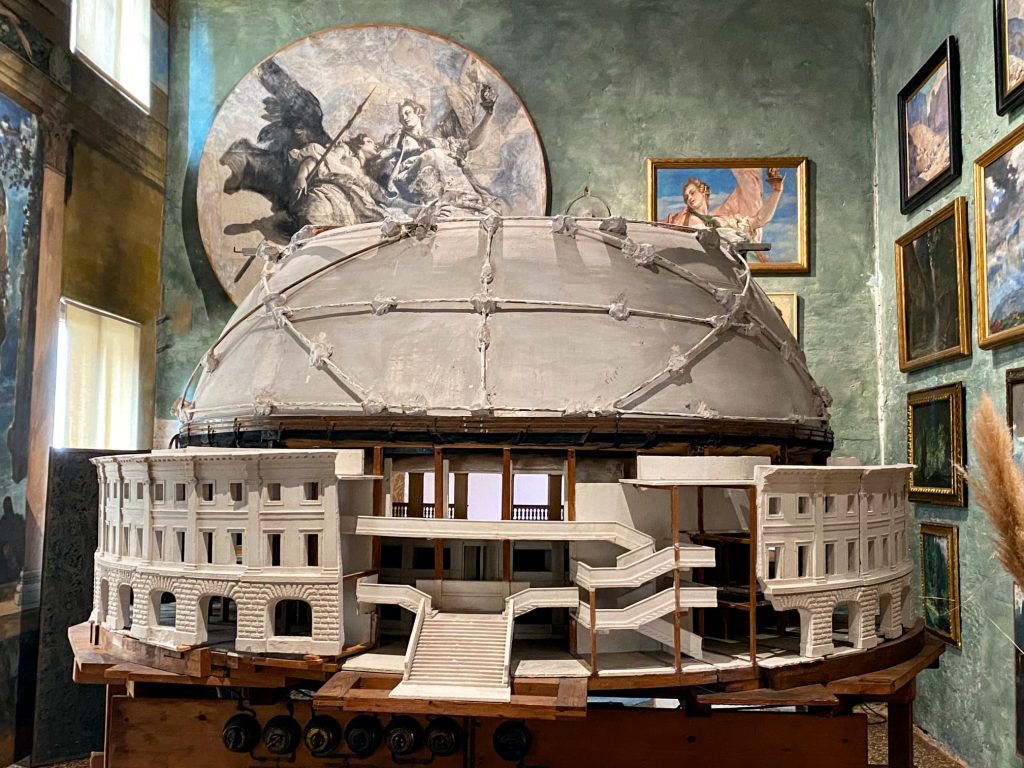
This man was born in 1871 in Granada, at the foot of the Alhambra. Spanish by birth, he left for Paris with his mother at the age of three, following the death of his father. His childhood was enriched by his parents’ many connections in the art world, his father’s paintings, and the oriental objects in his incredible collection. He studied painting, then developed a passion for theater and set design at a very young age. It was for the latter that he invented lamps that transformed stage lighting, applying his theories on soft, indirect light. Also, for the theater, he created the Knossos scarf, his first fabric garment, which dancers draped themselves in.
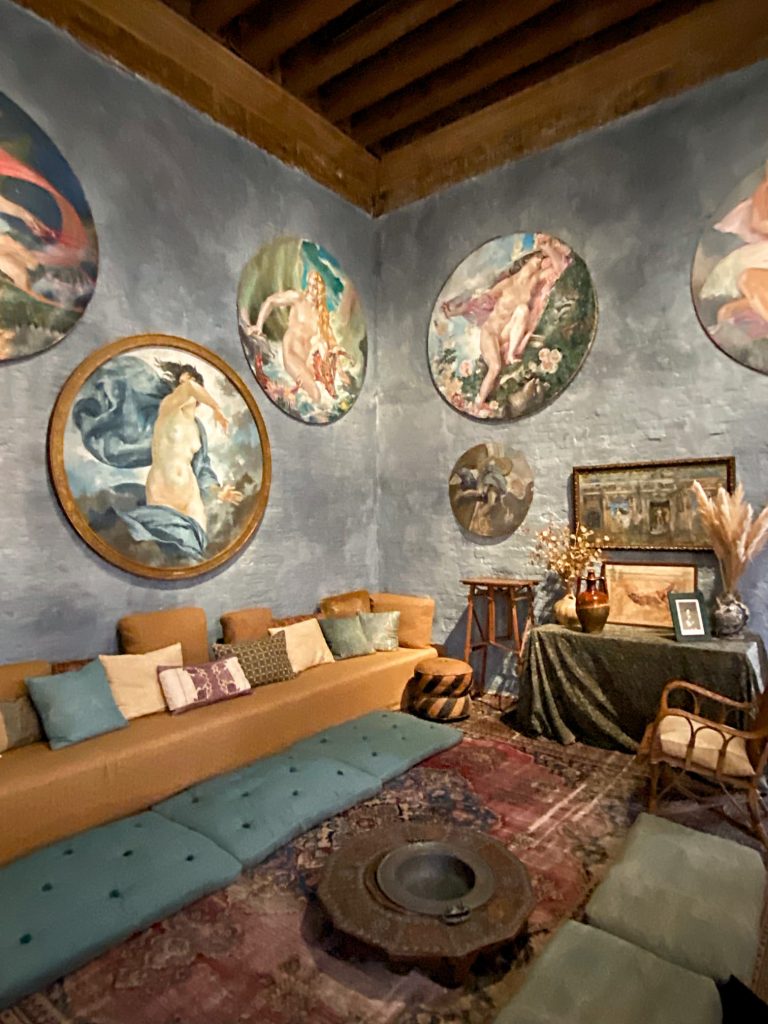
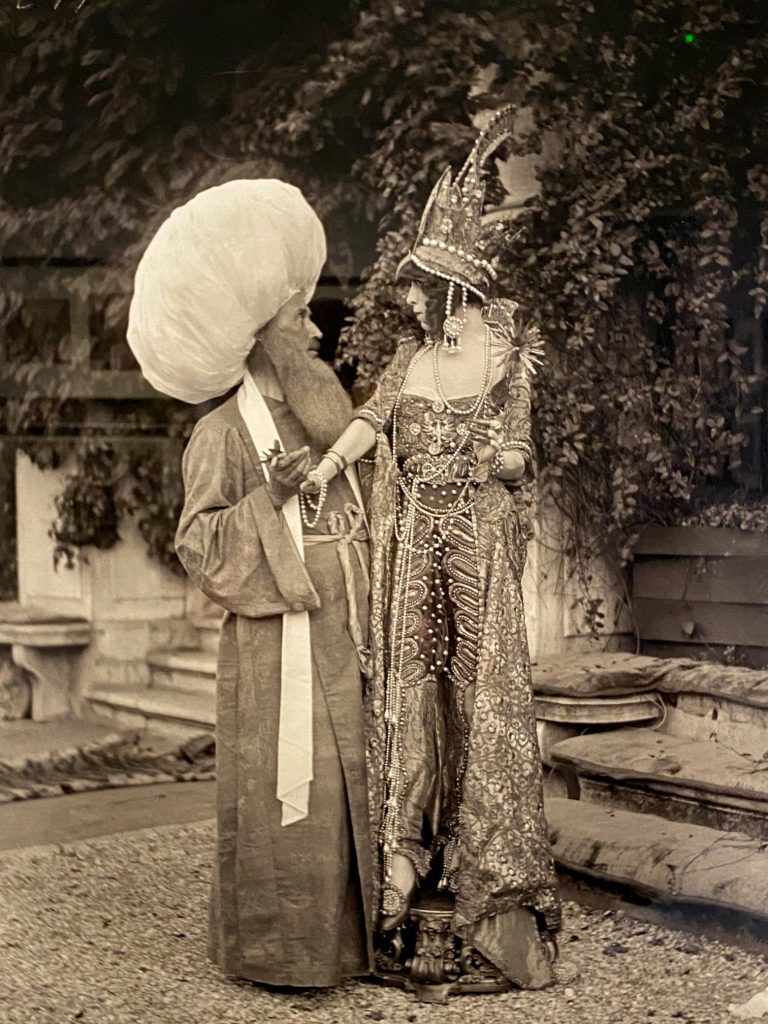
All his inventions are based on his own experiences, whether pictorial or chemical, as he also creates the colors for his fabrics using natural pigments.
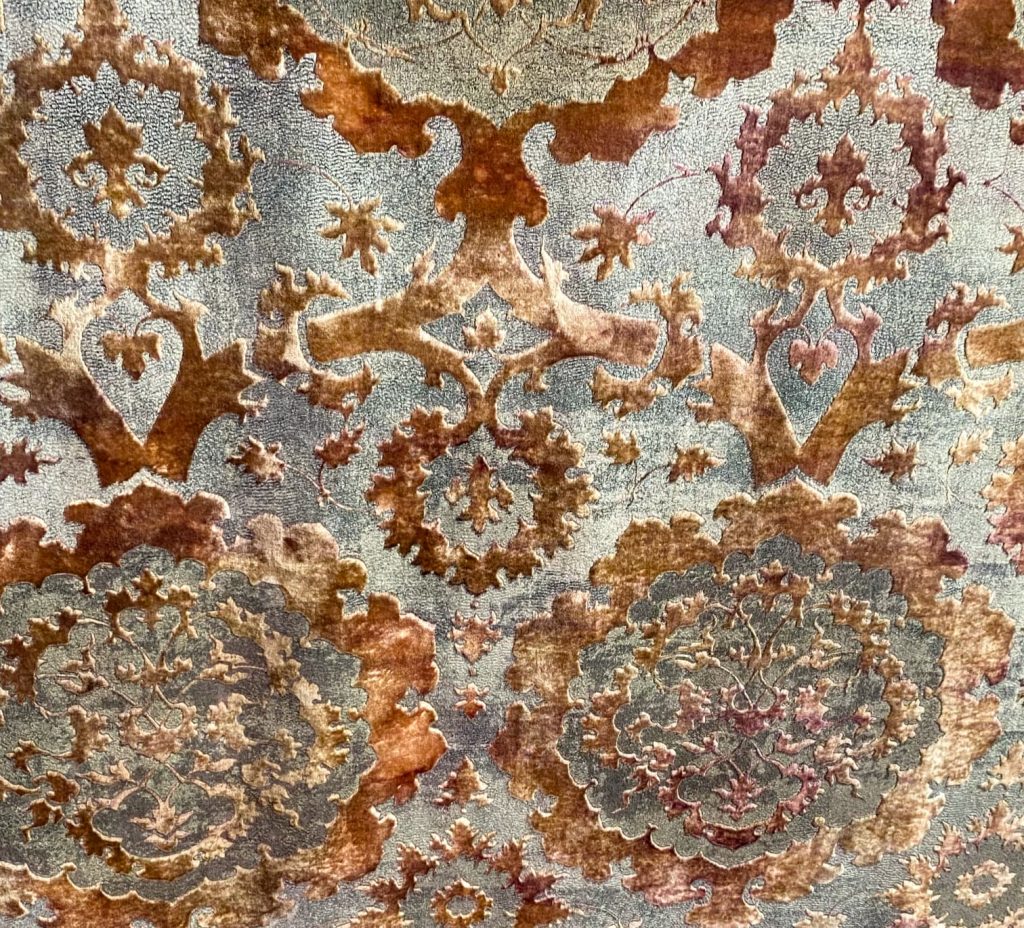
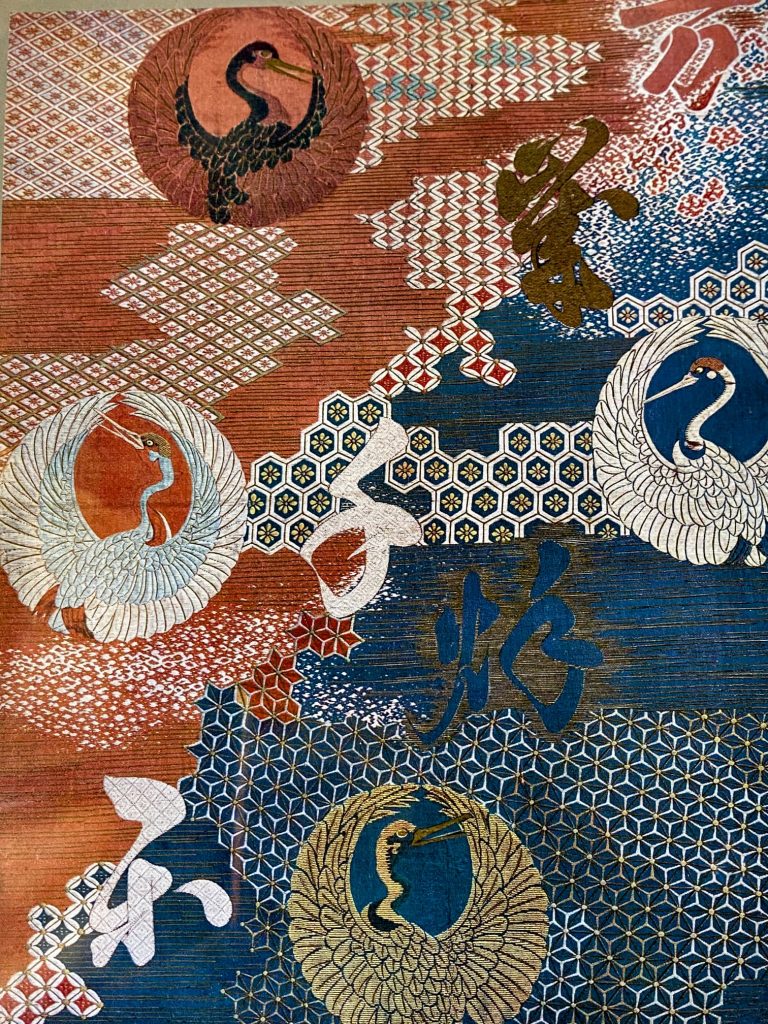
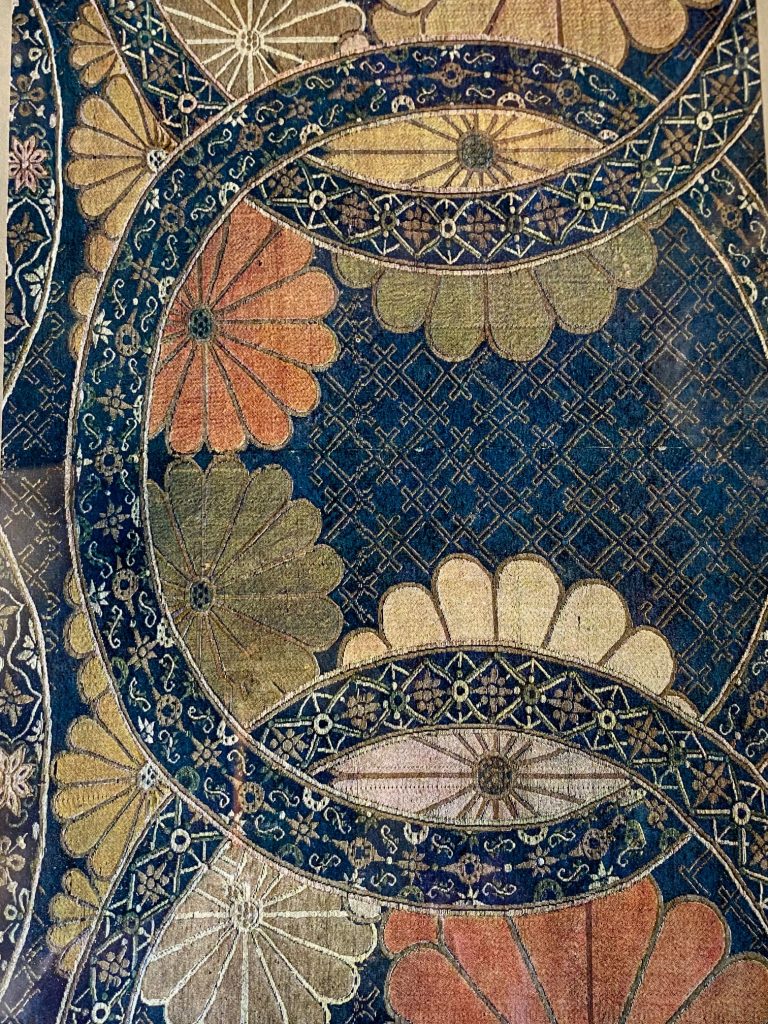
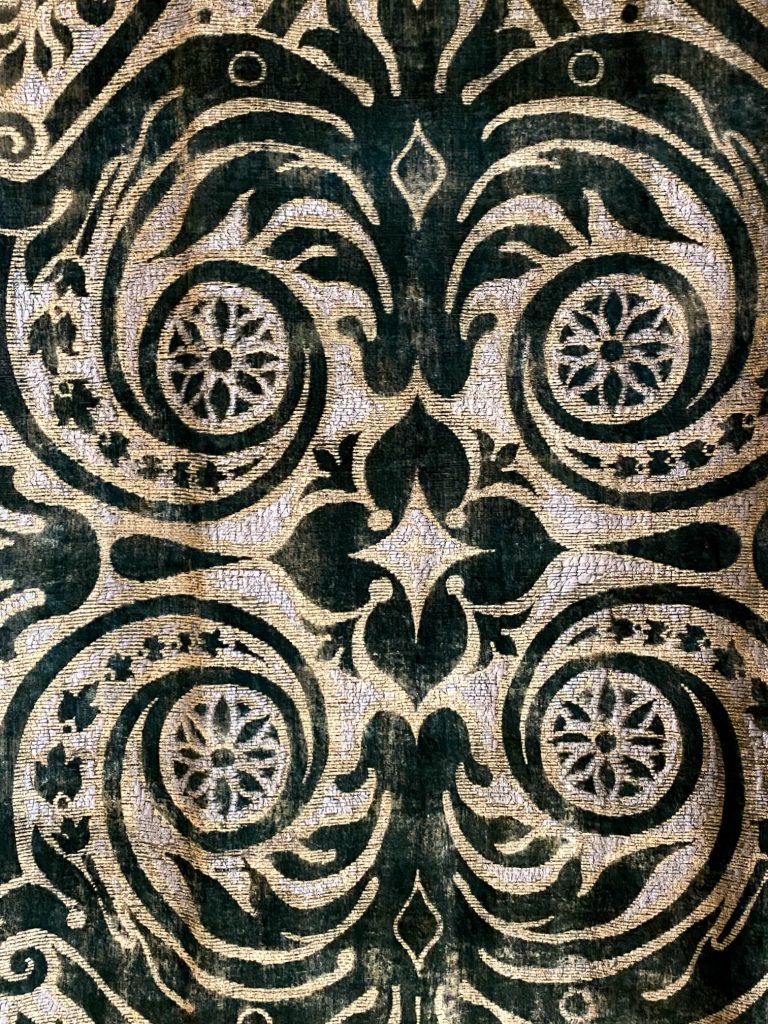
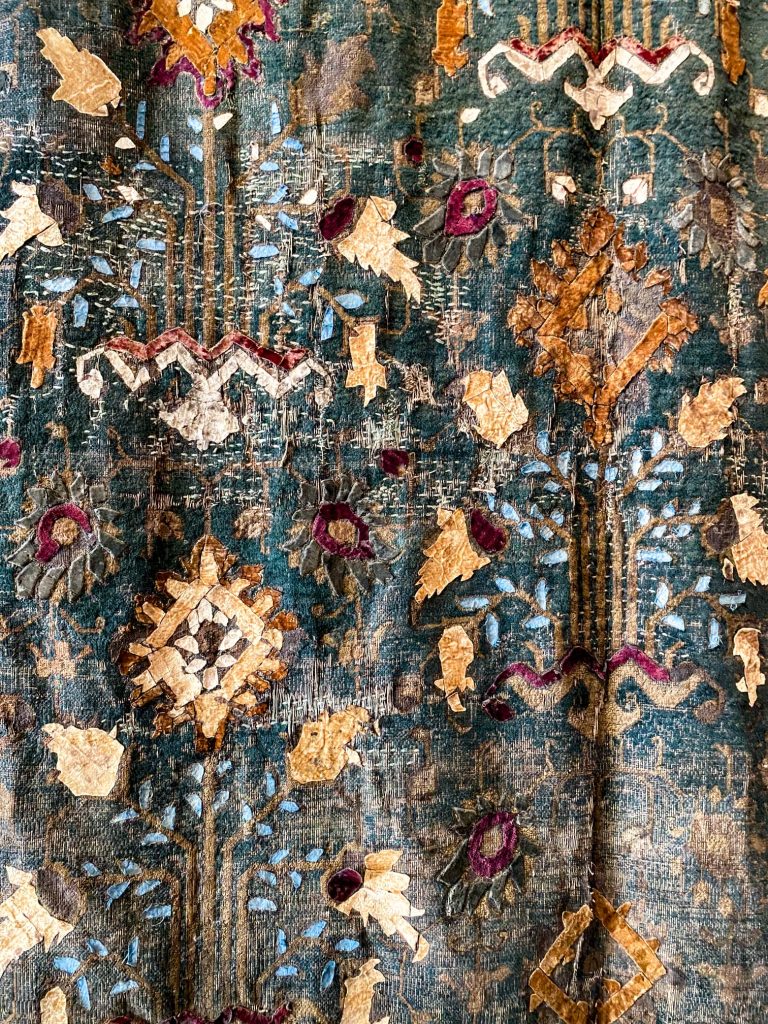
But beyond his undeniable artistic gifts, the appeal of all his creations lies in a rare and precious quality: illusion. For Mariano Fortuny is, above all, a magician. He transforms and sublimates, sprinkling a touch of the unreal to enhance everyday life. His photographs, fabrics, and decorations play with light, as do his lamps, reflecting an indirect image of the world. An idealized image. Whatever subject or discipline he tackles, Mariano turns it into an illusion. He twists it so that it seduces us, taking us to unknown shores.
Is it possible to be such an alchemist of art?
I remained skeptical about Mariano Fortuny’s supernatural gifts, wondering what strange spell I had fallen under in the corridors of this palace. Where did my fascination with this man come from?
When I discovered his father’s paintings in Granada a year later, I suddenly understood. His name was also Mariano (as is customary in Spain) and he was highly regarded in his day, his paintings falling somewhere between Impressionism and Orientalism. Standing in front of one of them, depicting a street in an old neighborhood of Granada, I was told that I was looking at a trickery. While this street lined with a church did indeed exist, the pretty house next to it was purely the painter’s invention. He loved to play this pictorial game: changing places and reinterpreting them to create an ideal setting. In fact, Mariano’s father’s paintings are often illusions. They depict his Granada, the city that only he could see, far beyond reality.
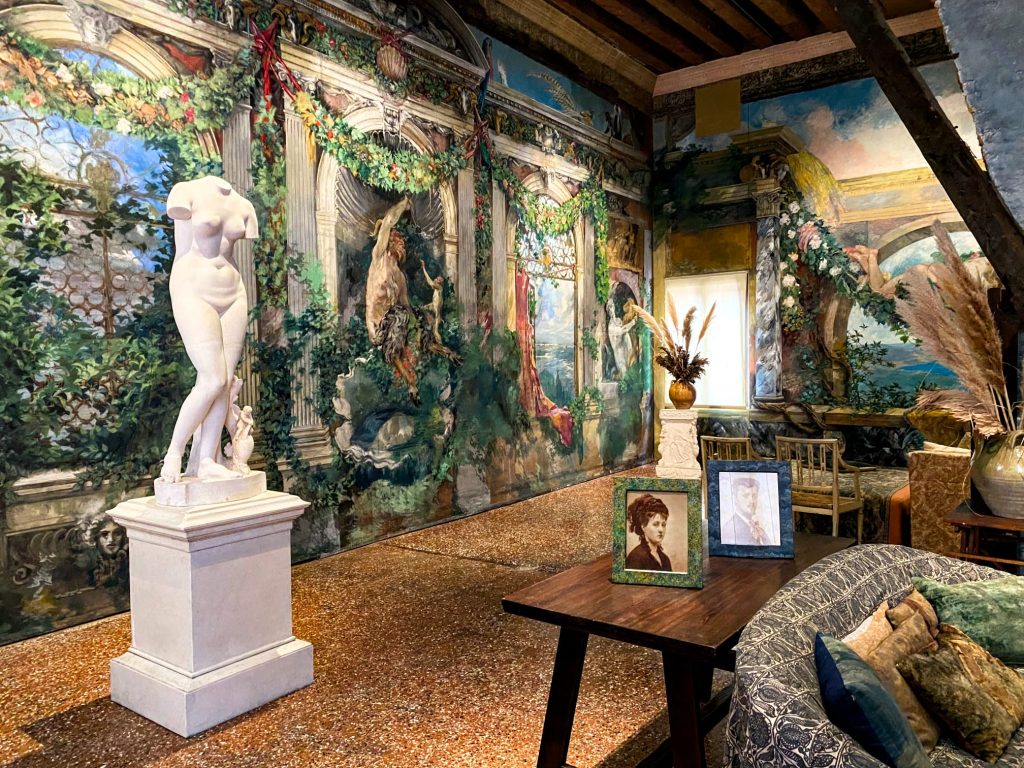
Fortuny father and son shared a desire to make the world more beautiful by embellishing and improving it. Heritage is a mysterious thing. Without ever having known his father, Mariano inherited his gift for sleight of hand and met a muse who collaborated on his magic tricks. It is with the wonderment of a child that we visit their lair, an alchemist’s crucible that transports us to another world.
Text and photos by Claudia Gillet-Meyer